
Following a competitive selection process, we are proud to share the two organizations that have been named Challenge Winners, each receiving a $60,000 grant to accelerate their work.
Four additional organizations have been selected as Challenge Finalists, also receiving funding to support the continued growth and impact of their projects.
In addition, all winners and finalists will receive full scholarships to attend the One Young World Summit 2026 taking place in Cape Town, South Africa, where they will join a global Community of young leaders committed to positive change.
Read more about their work below.
Meet the Winners
Larry Davis
Green Mechanics Benefit LLC
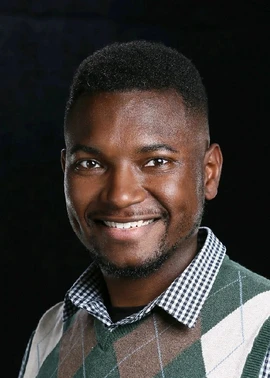
Larry Davis
Green Mechanics Benefit LLC
Emily Harris
Sandown Centre for Regenerative Agriculture
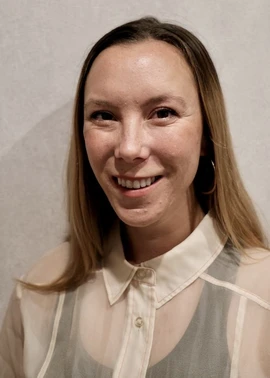
Emily Harris
Sandown Centre for Regenerative Agriculture
Meet the Finalists
Ranah Chavoshi
PhyCo Technologies Inc.
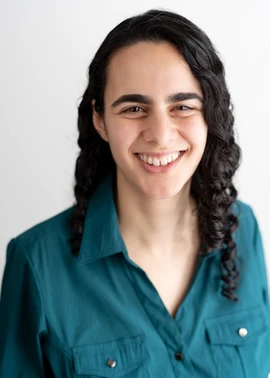
Ranah Chavoshi
PhyCo Technologies Inc.
Marika Dewar‑Norosky
Manitoba Organics
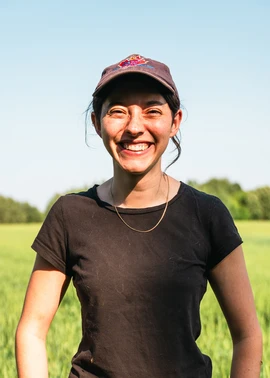
Marika Dewar‑Norosky
Manitoba Organics
Emma Ekua‑Bedua Hudson
Food for Thought Foundation
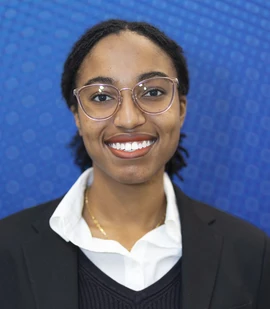
Emma Ekua‑Bedua Hudson
Food for Thought Foundation
Diana Virgovicova
Xatoms
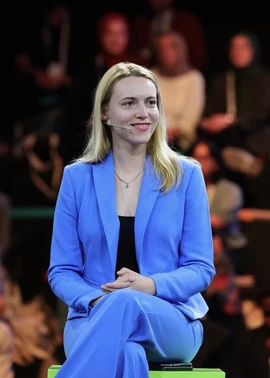
Diana Virgovicova
Xatoms
About the Challenge
Agriculture is a cornerstone of economic resilience across Canada and the United States, contributing significantly to GDP, employing millions in both countries, and serving as a major contributor to global food security. As the sector evolves, regenerative agriculture is gaining traction as a climate-smart solution that restores ecosystems, improves soil and water health, strengthens long-term farm resilience, and delivers a wide range of environmental and social benefits. Farmers, innovators, and communities are well positioned to lead a new era of regenerative and sustainable agriculture.
The Generation Regen Challenge aims to accelerate the development and adoption of regenerative and sustainable agriculture across Canada and the U.S.. By funding innovative social enterprises and non-profits, the challenge supports solutions that restore ecosystems, sequester carbon, and rebuild resilient local food systems. The Challenge aims to help innovators lead a global transition toward agriculture that nourishes the land while feeding its people equitably and sustainably.
Announced at the One Young World Summit 2025, the Generation Regen Challenge will provide $200,000 to accelerate non-profits or social enterprises in Canada and the U.S. working to protect and restore:
Local Farming: Strengthen farming practices, improve productivity, sustainability and climate resilience.
Soil health: Projects that increase lands’ capacity to sequester carbon, hold and filter water and improve other elements of soil functionality.
Animal welfare: Enhancing the welfare of farmed livestock and influenced wildlife.
Biodiversity: Protecting, restoring and enhancing biodiversity on farms.
Water: Enhancing water stewardship on farms towards a healthier watershed.
Crop Rotation and Diversity: Rotating crops and using diverse plant species to improve soil fertility and reduce pest pressure.
Indigenous and cultural practices: Supporting First Nations, Inuit and Métis / Native American food and agricultural practices, including increasing understanding, awareness and broadening adoption.
Food Security Systems: Improving access to safe, nutritious, and culturally appropriate food for underserved or at-risk communities.
-
Challenge Winners and Finalists will receive
To be considered for this Challenge you must:
- Be between 18 and 35 years of age*, leading a non-profit, charity or social enterprise.
- Your organisation must be a registered Canadian non-profit/charity or U.S. 501c3 OR
- A social enterprise registered in Canada or the U.S. If your organisation is a social enterprise you must propose a project with a social purpose and confirm that 100% of grant funds will be used for this project.
- Your organisation must have been registered for at least one year by 23 February 2026.
- You must propose a project/programme that will be delivered by your organisation. The project/programme must be based in and focused on Canada and/or the U.S. This may be an existing project/programme or something new.
Successful applicants will:
- Propose a robust regenerative or sustainable agriculture project/programme.
- The Generation Regen Challenge recognises that, while all 'regenerative agriculture' is sustainable, not all 'sustainable agriculture' is regenerative. Projects/programmes that can be considered examples of 'sustainable agriculture' will certainly be considered but projects that can also be considered examples of 'regenerative agriculture' are preferred.
- Propose a project/programme capable of having a positive impact on one or more of the following areas:
- Local farming: Strengthen farming practices, improve productivity, sustainability and climate resilience.
- Soil health: Projects that increase lands’ capacity to sequester carbon, hold and filter water and improve other elements of soil functionality.
- Animal welfare: Enhancing the welfare of farmed livestock and influenced wildlife.
- Biodiversity: Protecting, restoring and enhancing biodiversity on farms.
- Water: Enhancing water stewardship on farms towards a healthier watershed.
- Crop rotation and diversity: Rotating crops and using diverse plant species to improve soil fertility and reduce pest pressure.
- Indigenous and cultural practices: supporting First Nations, Inuit and Metis / Native American food and agricultural practices, including increasing understanding, awareness and broadening adoption.
- Food security systems: Improving access to safe, nutritious, and culturally appropriate food for underserved or at-risk communities.
- Demonstrate innovation and prove potential or actual change with projects that align to one of the following stages of innovation:
- Developing and Testing: Accelerator programs; Experiments & Trials; Innovation prototyping; Needs assessing etc.
- Making the Case: Experiments & Trials; Research; Standards of Evidence; Business Case development; etc.
- Delivering and Implementing: Pilot initiatives; Public & Social labs; etc.
- Growing and Scaling: Expansion of a proven idea; Replication of a proven idea; Impact Measurement; etc.
- Changing Systems: Policy and White paper development; etc.
- Demonstrate their ability to deliver the project within proposed timeframe, manage funds provided and conduct required reporting and analysis.
- Demonstrate a commitment to safety and equity. Projects should prioritise the safety and well-being of all participants and communities involved, while promoting equitable access, fair labour practices, and inclusive decision-making processes that respect the rights and dignity of all stakeholders, particularly marginalised and underserved communities.
Projects that fall under any of the following categories will not be considered:
- Projects delivered outside of Canada or the U.S.
- Funds for individuals for work delivered individually and not through a non-profit, charity or social enterprise.
- Partisan or politically affiliated programs.
- Programs that may be considered discriminatory.
- This Challenge is intended to recognise and champion individual leaders as much as it is intended to support the work of organisations. All applications should be submitted by the leader (E.g Founder, Co-founder, CEO, Chairperson) of the organisation through which the proposed project will be delivered.
- All applications must be submitted in either English or French.
- Only one application per organisation can be considered.
- Applications submitted after the challenge deadline will not be considered.
- All information submitted in your application must be truthful and accurate.
- *One Young World identifies and connects young leaders from every country, joining our Community via our partner organisations and scholarship programmes. Most participants in One Young World programmes and the One Young World Summit are between the age of 18 and 35. One Young World will consider applications from those who are older than this, pending demonstration of appropriate personal impact, initiative, and willingness to engage. One Young World cannot consider applications from individuals who will be under the age of 18 by the time of the One Young World Summit 2026 in Cape Town which takes place from 3 - 6 November 2026.
- Information submitted in your application will be processed in accordance with One Young World's privacy policy.
- If you have any questions about the application process, or submission rules please contact [email protected].

The Generation Regen Challenge is presented by and delivered in partnership with BMO.
BMO is a leading North American bank driven by our purpose: to Boldly Grow the Good in business and life. It informs our strategy, drives our ambition, and reinforces our commitments to progress: for a thriving economy, a sustainable future and stronger communities. Find more about BMO here.