
We are proud to introduce the five Plenary Challenges that will shape the agenda of the One Young World Summit 2026 in Cape Town.
Through our Global Consultation Process (GCP), more than 1,500 young leaders from over 150 countries shared their perspectives on the challenges that will define their futures. Their responses reveal a generation deeply concerned about food security, safety, jobs, peace, and the direction of global leadership.
Three insights from this year’s consultation stand out:
Rising to 88% across Africa, underscoring the urgency of addressing the global food crisis.
Highlighting both the promise and anxiety surrounding the future of work.
A figure that rises to 91% in South Africa.
Following careful analysis of the full GCP data, these concerns have informed the five plenary challenges for the 2026 Summit:
Agriculture and the Global Food Crisis stats
Nearly

What Will It Take to Achieve Food Security for All?
Agriculture lies at the heart of global food security, yet the world is still far from ensuring that everyone has enough to eat. According to the most recent United Nations data, between 713 million and 757 million people were undernourished in
2023, that’s roughly 1 in 11 people globally, and 1 in 5 in Africa.[1] Moreover, about 2.3 billion people faced moderate or severe food insecurity, meaning they lacked reliable access to sufficient, nutritious food.[2]
Multiple interconnected challenges drive this crisis. Conflict, climate change and economic shocks have repeatedly disrupted food systems, pushing millions deeper into hunger; for example, in 2024 more than 295 million people across 53 countries
experienced acute hunger, with the number rising for the sixth consecutive year.[3] Meanwhile, food prices remain high in many low-income regions, and extreme weather events undermine agricultural productivity.
Achieving food security for all will require strengthened agricultural systems that can absorb these shocks. This includes greater investment in sustainable farming practices, support for smallholder farmers, climate-resilient crops, and policies that ensure fair access to markets and nutritious diets. Without such coordinated action, right from local to global levels, reaching Sustainable Development Goal 2, Zero Hunger, by 2030 remains a significant challenge.
Intelligent Jobs

How can AI power opportunity for the next generation?
Artificial intelligence is reshaping the world of work, offering both challenges and opportunities for the next generation. According to the World Economic Forum’s Future of Jobs analysis, AI and related technologies could lead to the creation of 170 million new jobs globally by 2030, while displacing an estimated 92 million roles — resulting in a net gain of about 78 million jobs.[4]
This shift highlights that AI has the potential to expand employment, particularly in roles that require technical skills, creativity, and problem-solving abilities. Furthermore, demand for AI-complementary skills is growing fast, with employers increasingly willing to pay a wage premium for roles requiring AI expertise. [5]
On the African continent, AI is already reshaping the world of work and offering both risks and opportunities for young jobseekers. A 2025 PwC Africa workforce survey found that 64 % of African workers reported using AI tools at work in the past year, outpacing the global average of 54 % and many workers see AI improving the quality of their work and boosting productivity. [6] However, the rapid spread of AI also poses challenges: research suggests that up to 40 % of tasks in Africa’s tech outsourcing (BPO) sector could be automated by 2030, with entry-level work and lower-paid roles most at risk unless workers gain new skills. [7] To ensure that AI drives job creation rather than displacement, investment in skills training, including programmes like Microsoft’s initiative to train 1 million South Africans in AI and cybersecurity by 2026 will be critical for enabling young people across Africa to participate in higher-skilled, better-paid roles in an AI-powered economy. [8]
Equipping the next generation with digital literacy, critical thinking, and AI-related competencies can help them thrive in jobs that are newly created and evolving in an AI-driven economy.
Gender Based Violence
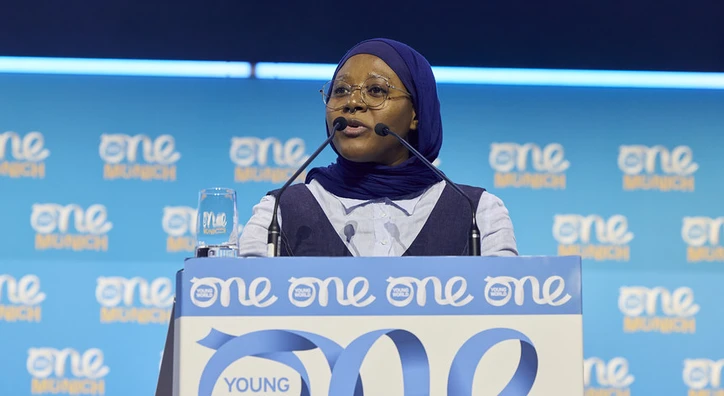
How do we prevent the physical, sexual, and mental abuse of women and girls?
Gender-based violence remains a pressing global human-rights issue that affects women and girls of all ages. According to a 2025 United Nations report, around 50,000 women and girls were killed by intimate partners or family members in 2024, which equates to an average of 137 victims every day. [9] This means roughly one woman is murdered every ten minutes worldwide. Violence can also take physical, sexual, or psychological forms and often occurs in private spaces where reporting
and help are hardest to access.
In South Africa, the crisis is especially severe. UN Women data show that the femicide rate there is one of the highest in the world, significantly above global averages, and activists have highlighted that about 15 women are killed daily because of Gender Based Violence. [10] A South African Human Sciences Research Council survey also found that approximately one in three women experiencesphysical violence in her lifetime. [11] These stark realities led the government to declare GBV a national disaster in late 2025, enabling increased funding and coordinated action.
In Italy, lawmakers have taken a different legal approach. In late 2025 the Italian Parliament passed a landmark law making “femicide” a distinct crime in its criminal code, punishable by life imprisonment and accompanied by expanded support services and funding for anti-violence centres. [12] In 2024, Italy recorded 106 femicides, most committed by intimate partners or former partners. [13]
Preventing GBV requires a multi-layered strategy: strong legal frameworks, accessible reporting and support services, education and cultural change to challenge harmful gender norms, and community-level prevention programmes that empower survivors and reduce stigma.
Future of Africa

How do we make this the 'African Century'?
Africa stands at a pivotal moment where its demographic dynamism and economic potential could define the African Century. The continent’s working-age population is rapidly expanding; by 2043 Africa’s labour force is expected to nearly double from current levels, making youth employment creation critical for sustained growth. [14] Economic expansion is underway: Sub-Saharan Africa’s GDP growth is projected to reach 3.8 % in 2025, above many other regions, despite global uncertainties. [15]
A key driver of future opportunity is trade and integration. The African Continental Free Trade Area (AfCFTA), consisting of 55 countries with 1.3 billion people, could increase intra-African trade by over 50 % by 2025 and add an estimated $450 billion to GDP by 2035, boosting manufacturing and services.
Job creation through emerging sectors is essential. Research forecasts that Africa’s green economy could generate up to 3.3 million direct jobs by 2030, especially in renewable energy, climate-smart agriculture, and sustainable manufacturing — with South Africa alone projected to gain up to 275,000 green jobs. [16]
Yet structural issues remain, notably in South Africa, where unemployment is persistently high with more than 40 % of adults unemployed. [17] Addressing this requires investment in skills development, digital infrastructure, and policy reforms that enable private sector growth. Prioritising education aligned with market needs, strengthening institutions, and fostering innovation can help Africa translate its youth-led workforce into a competitive, equitable economy, making the African Century a reality.
Peace and Security
42% do not.
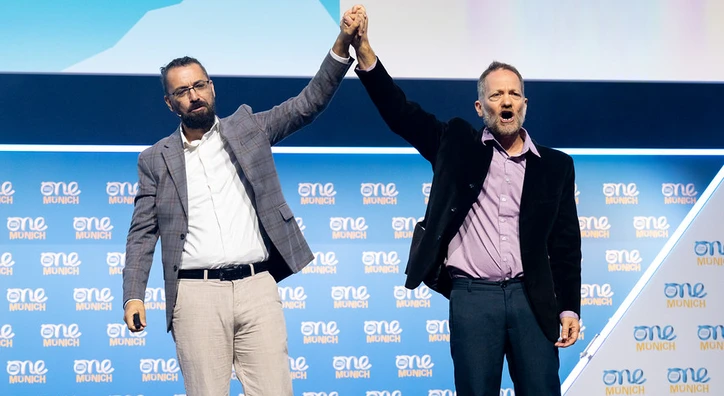
How can young leaders restore diplomacy to end the cycle of violence?
Peace and security remain central challenges in a world where violence and conflict affect millions, especially young people. Today’s generation is the largest in history, with over 1.2 billion individuals aged 15–24, and in regions like Africa around 60% of the population is under 25. When provided with opportunities to participate in peacebuilding and diplomacy, young people can shift from being seen as passive victims or security risks to becoming active agents of peace and change. [18]
The United Nations’ Youth, Peace and Security (YPS) agenda recognises that meaningful youth participation in diplomacy and conflict prevention helps break cycles of violence. These frameworks call for young people to be included in decision-making, prevention efforts, community dialogue, and reintegration processes after conflict. [19]
Globally, more than 600 million young people live in fragile or conflict-affected contexts, and many face violence, displacement, or lack of education and jobs, factors that can fuel instability if left unaddressed. [20] Empowering youth with political voice, diplomatic skills, and access to economic opportunities not only reduces incentives to join violent movements it also builds bridges between divided communities and fosters sustainable peace. Initiatives that support young mediators, include youth voices in negotiations, and leverage technology and grassroots networks are already showing promise in preventing violence and strengthening peace processes.
Ultimately, restoring diplomacy and ending cycles of violence requires intergenerational dialogue, investment in youth leadership, and shifting narratives so that young people are partners in peace rather than bystanders. [21]